I don’t think this pairing would exactly mystify anyone, but I put them together for a reason other than what you might think. I’ve been reading The Freaks Came Out to Write, Tricia Romano’s oral history of the Village Voice, a publication where I got a few reviews published during the window that Chuck Eddy served as music editor. Romano didn’t contact me for an interview; the world-changing words I wrote for the Dec. 7, 1999 issue about Third Eye Blind’s second LP Blue seemed to have flown under the radar somehow.
Beyond whatever reviews I contributed, though, the Voice had a huge impact on me–first as a reader, later as a voter–via its annual Pazz & Jop poll on the year’s best albums and singles (and, at various times, EPs, reissues, and videos). The poll was launched in 1971 (inaugural winner: Who’s Next) and continued, without interruption–kidding; a two-year hiatus in 1972 and ‘73 was cause for a long-running joke–until 2017, when it made a messy and, as I remember it, confusing exit. I voted for the first time in 1997, and I was still voting at the end–not quite half of Pazz & Jop’s lifetime, but close. I only voted for singles; there were one or two other voters besides me who did the same. Actually, singles themselves weren’t always part of the poll–they were added in ‘79, a necessity, really, as critical attention had shifted away from classic rock to the much more singles-oriented genres of disco and new wave. My friend Scott thinks Pazz & Jop needs an oral history of its own (it gets a chapter or two in Romano’s book), and I’m inclined to agree.
Arrested Development and Outkast were double-winners in their Pazz & Jop years, topping both the albums and singles lists* (Arrested Development won the singles poll with “Tennessee,” not “People Everyday”). Outkast managed to pull that off twice, having already done so in 2000 with Stankonia and “Ms. Jackson,” making them the only two-time double winners in P&J history. As far as I can tell, scrolling back and forth across Wikipedia’s two lists, the only other hip-hop artist to win albums and singles in the same year was Kanye West in 2005; the other double-winners were Michael Jackson (1983), Prince (1987), Nirvana (1991), and Amy Winehouse (2007). Eight times in 40 years, starting with the ‘79 poll–not easy. (Point of comparison that may or may not mean anything to you: in 125 chances, a major league pitcher has won the Cy Young and MVP in the same season 11 times.)
As a middle-aged white guy who was late to hip-hop (I started to catch up in the mid-’80s), my historical perspective is laughably subjective and not necessarily reflective of real history at all, but, with that in mind, the decade between “People Everyday” and “Hey Ya!” now feels like several lifetimes on the hip-hop timeline. In ‘92, there were two hugely interesting stories happening side-by-side. On one track, there was hip-hop’s ongoing commercial ascendance, which, coinciding with my own entry point, started in the mid-’80s with Raising Hell and Licensed to Ill, then continued to pick up momentum unabated for the next decade-plus; on the other, the sudden and improbable crossover into the mainstream of all sorts of artists previously relegated to college and alternative (or maybe it was still called “modern rock” then) charts–the post-Nevermind moment, just underway. By 2003, though, there was only one story left: the incredible stranglehold of hip-hop on not just popular music but pop culture in general.** I don’t know how the ubiquity of hip-hop in the late ‘90s stacks up against the ubiquity of disco in the late ‘70s, but its inexhaustible ability to recreate itself in new and surprising ways, and its formal reach across most every corner of the pop charts, was remarkable.
Arrested Development’s P&J sweep is not remembered fondly today.*** 3 Years, 5 Months and 2 Days in the Life Of… is routinely cited as one of the weakest P&J album winners ever, and neither “People Everyday” nor “Tennessee” landed on Rolling Stone’s latest Top 500 Songs list. (Outkast placed four songs in the top 150.) Robert Christgau, the poll’s founder, spent the first three paragraphs of his annual P&J essay in 1992 recounting the twists and turns of his basic indifference to the album: “‘Do you ever listen to it?’ I’d ask.” I wouldn’t go so far as to say it’s the American Beauty of Pazz & Jop, winner of the Academy Award for Best Picture in 1999 and now almost universally reviled. It’s more like A Man for All Seasons, 1966’s Best Picture winner, eliciting not much more than a shrug of the shoulders nowadays.
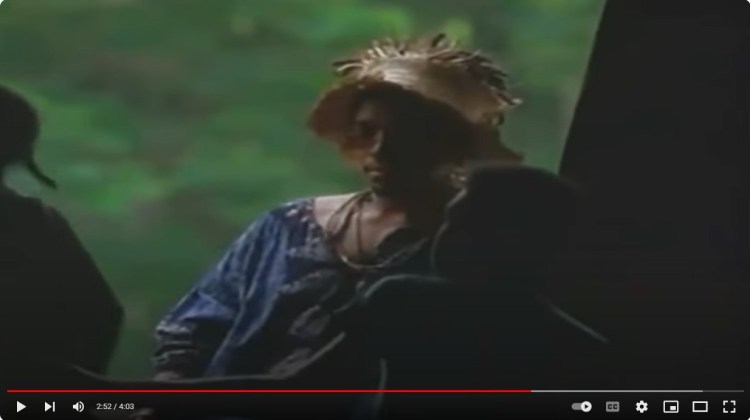
But as I once explained in a rockcritics.com survey on the worst P&J winners, all I need is to love one song and the question becomes moot. And I loved “People Everyday.” I didn’t buy 3 Years… until a few years later,**** so there’s a good chance I first experienced “People Everyday” as a video. But not necessarily–in what felt like the dying breaths of Top 40 radio at the time, Toronto had AM 640 for a year or a two (a brief stopover between country and dance formats), which would actually play Nirvana and Salt-n-Pepa side-by-side, as if it were 1966 and what linked “Smells Like Teen Spirit” and “Let’s Talk About Sex” was far more obvious than whatever made them different. In any event, the video for “People Everyday” simultaneously recounts the song’s narrative, visualizes its intricate call-and-response via cutting, and keeps the camera moving within even the briefest shots. About half of it is in black-and-white, while the rest is shot in the loud bright colours that they wear. Speech, lead vocalist on “People Everyday”–he also directed the video–gets much of the camera’s attention, but the most memorable moments for me are provided by Nadirah Shakoor (“You know, you know, you know…”) and Aerle Taree (who punctuates the line about bright colours with a bracing “BOO!”).***** Indelible images are scattered all over “People Everyday”–Taree tracing a box in the air at 1:07, scooping Uma Thurman in Pulp Fiction by two years; the way Speech’s girlfriend (“my Black Queen” in the song) slowly turns her head at 1:27; Speech’s Black Power salute on the word “African” at 2:27–and on that level alone, as a series of fleeting gestures, I think it’s a video that would have lingered in my mind forever. And that’s an important part of why it’s here. But there’s also that narrative–and that’s where “People Everyday” really starts to fascinate, confound, and, in the end, deeply move me.
Back to the timeline. When 3 Years… came out in the spring of 1992, the more profane side of hip-hop had certainly made its presence felt–Schoolly-D’s debut in the mid-‘80s, N.W.A.’s breakthrough soon after, 2 Live Crew’s PMRC-baiting As Nasty as They Wanna Be–but such records were still the exception rather than the rule; Dr. Dre’s The Chronic and Snoop Dogg’s Doggstyle were still months away. So when Speech describes his girlfriend being sexually harassed in “People Everyday” as “a group of brothers…going the n—– route,” it’s like he’s laying down a marker against what’s just around the corner, a new kind of hip-hop that will dominate the genre for the next decade. He positions himself in complete opposition to this developing story, and does so in highly charged racial terms, but he also expresses a kind of roundabout kinship: “I ain’t Ice Cube/But I had to take the brother out for being rude.”
How was all of this received at the time? My recollection is that the almost immediate backlash against Arrested Development was because they were perceived as being too wholesome and too collegiate–given to (self-) righteous anger over rudeness, patronizing enough to get their pointer out and instruct us that “The moral of the story is…” (one of my very favourite moments in the song, actually), peddlers of hip-hop that was ostentatiously Good for You. Or maybe it was that they were trying to play both ends against the middle, damning Ice Cube and embracing him simultaneously. Or that Speech was a fashion misfit. Or that the rest of the album wasn’t very good after the first two (or first three–there was “Mr. Wendall,” too) singles. Further complicating this morass was “People Everyday”’s predecessor, “Tennessee,” the last Top 40 hit I can remember to confront lynching head-on,****** and also Sly & the Family Stone’s “Everyday People,” at once the most sublime call for racial understanding to come out of the ‘60s and the foundation, both musically and spiritually, for “People Everyday.” (Speech is credited as “People Everyday”’s sole songwriter, but the album does credit “Everyday People” with providing portions of the song.) When I reviewed “People Everyday” in my fanzine Radio On in 1992, it all seemed relatively straightforward to me. In 2024, trying to reconcile the song’s internal contradictions and ambiguities feels like a landmine. Which leaves me even more awestruck today than I was then.
Coming out the other side of the looking glass, there’s “Hey Ya!” in 2003. My own connection to pop charts and whatever amounted to Top 40 radio at the time (if indeed anything did) had been basically severed for good–my only motivation for nominally keeping up was hearing enough to come up with a Pazz & Jop ballot I was comfortable with at the end of the year. But I do remember being quite taken with “Hey Ya!”’s climb to #1 on Billboard’s Top 100 (which took about two months, where it would reside for the next nine weeks), gushing to grade-school students that it was the most obvious hit single since Prince’s heyday to potentially reel in every corner of the pop audience. And I guess it did, to a degree, because that’s part of landing a #1 single. But probably not to the extent that I chimerically envisioned–I don’t think it landed on the playlists of country or classic-rock stations.
The official video for “Hey Ya!”–which is not the one I want to write about–is pretty damn great in its own right, a playfully inspired dream-scenario of the song’s unifying embrace. In a clear nod to the Beatles’ hysteria-inducing appearances on The Ed Sullivan Show–their first and most famous taking place on February 9, 1964–Outkast is reimagined as the Love Below, making their London debut on some unnamed TV show (reversing direction on the Beatles’ Atlantic crossing) hosted by a not very Sullivan-like British bloke in a tilted straw hat. The seemingly all-female audience erupts in hysterics, the black-and-white image (framed by a TV set) goes brilliantly green, and no fewer than eight André 3000s start tearing their way through “Hey Ya!” At least two of the Andrés are clearly based on recognizable figures from the past: “Benjamin Andre,” the keyboard player, is decked out in Thelonious Monkish be-bop attire, while “Possum Jenkins” on guitar uncomfortably evokes Ike Turner. If that doesn’t mess with your head enough, the trio on background vocals, the “Love Haters,” look like lawn jockeys. The screaming audience (one of whom rushes the stage before being comically whisked away) and on-stage theatrics are played off against a family of five’s home-viewing party, led by a young boy doing a spirited variation on the Roach.******* Just past the four-minute mark, three or four women provide a helpful reenactment of what it means to “shake it like a Polaroid picture,” words that were deeply mysterious to anyone under 20. Quite insane, all of it, and in 2006 named by online music zine Stylus as the 72nd greatest video ever made.
If the story of “Hey Ya!” as a music video had ended there, that would’ve been just fine–and I’m guessing that for the majority of those who’ve looked at it 7.4 million times since it was uploaded to YouTube in 2010, it did. But in a perfectly superfluous burst of ingenuity, someone out there******** came up with a DIY mash-up of Outkast’s song overtop scenes from A Charlie Brown Christmas, originally broadcast by CBS in 1965 and probably the most beloved of all the animated Christmas specials that my generation (I’m 62, tail end of the baby boom) grew up with. If an Outkast/Charlie Brown pairing seems audaciously counter-intuitive, a) it is, and b) as melded together here, the two couldn’t mesh more perfectly. Anarchy comes in all kinds of different forms.
After a brief prologue of the Peanuts gang peacefully skating on a pond, abruptly broken up by Charlie on his megaphone delivering Outkast’s 1-2-3-uh count-in, the “Hey Ya!” mash-up focuses on the Christmas play Charlie’s been enlisted to direct, where his lofty motivational speeches and formal stage directions are completely upended by his cast’s ecstatic communal dance. You know the scene: as Charlie drones on, Schroeder starts banging away at his piano, and everyone immediately goes into their signature dance moves as if in a trance. Shermy does his Frankenstein-on-a-treadmill move, Frieda and Violet work variations on the Frug, Linus (blanket in tow) pumps his arms wildly, Sally steps gingerly, the twins in purple dresses sway like a pendulum, and, my favourite, 5 (had to look up his name) does this robotic thing that involves swiveling his head back and forth as if he has no neck. As liberating as those images are when soundtracked by the Vince Guaraldi Trio’s “Linus and Lucy” in the TV special, “Hey Ya!” makes you see them anew–if you’re like me, you’ve seen A Charlie Brown Christmas at least a couple dozen times–and gives them a totally unexpected, left-field jolt of energy. The clip is not entirely the “Linus and Lucy” dance, though; sometimes the images come from elsewhere in the 25-minute original. What the creators are able to do with specific lines–the “What’s cooler than being cool?” back-and-forth, “I am your neighbour!” “We gonna break this thing down in just a few seconds”–is, yes, ice cold. And when a lyric is needed to match Lucy in psychiatrist mode gleefully shaking her money jar so she can hear those coins jangle, that one’s an uncontested layup. (Sally, Linus, and Snoopy also get to shake it like a Polaroid picture.)
I’m not sure exactly when I encountered the “Hey Ya!” mash-up in relation to the original video–within a year or two, I’m guessing. I loved playing it for students: “This is where we are, this is what can be done.” I distinctly remember that being able to find the mash-up was a dodgy proposition early on: it would be there one day, then it would be taken down for a few weeks, then it would pop up again. (From that Wikipedia “Talk” page, it would seem that United Features Syndicate, who must have owned the rights to the Peanuts comic strip, was the party objecting.) There was still this belief then that you could remove something from the internet permanently with enough persistence. “Nothing is forever” except love, “Hey Ya!” declares. What a quaint notion–I don’t know about love, but stuff on the internet definitely never dies.
That’s where the ghost of Pazz & Jop lives on too, with all the results from 1971 to 2017 housed on either Robert Christgau’s website or Rocklist.net. The “Expert Witness” Facebook group, comprised of writers and fans who were and are longtime readers of Christgau, has its own yearly music poll meant to honour the memory of Pazz & Jop. Christgau is on to his third or fourth iteration of his monthly Consumer Guide, now found on his Substack blog. The Voice itself is a ghost these days, a semi-functioning online-only publication that mixes occasional new pieces with archived material. Outkast played their last show in 2014, but André 3000 and Big Boi keep busy with all sorts of media projects; I enjoyed André’s performance last year in Kelly Reichardt’s Showing Up. Arrested Development is still out there playing various festivals and one-offs. Charles Schultz died in 2000, a little over a month into the new century. You can still watch A Charlie Brown Christmas, but not on CBS–the rights to everything Peanuts was purchased in 2020 by Apple TV, where you can stream the show for free inside a three-day window every year (and pay for it the other 362 days).
Which is partly something else this blog is about–not what lasts forever, not what goes away, but what lingers.
*Something Sinéad O’Connor, Liz Phair, and Lauryn Hill, all of whom I framed in terms of Pazz & Jop earlier, didn’t do: O’Connor and Hill were runners-up in both categories, while Phair finished first on the album list but didn’t place a single in the top 25 (primarily because Exile in Guyville didn’t have any).
**Halfway through that decade-long gap, the post-Nevermind moment still sounded pretty lively to me; there was Harvey Danger’s “Flagpole Sitta” and Blink 182’s “All the Small Things” and Third Eye Blind’s “Semi-Charmed Life,” among others. By 2003, it was Nickleback and Three Doors Down and the lingering shadow of Iron Butterfly.
***Unless the pendulum has swung back, and it’s been rediscovered after having been dismissed for so long. That happens too.
****Where I discovered a “People Everyday” radically different from what I’d heard on the radio and seen on MuchMusic (one and the same, probably)–I’m not even sure that I liked the album version.
*****I didn’t know who this was at first–Dionne Farris?–and the internet wasn’t helping, so I actually messaged the Arrested Development Facebook page for help. Took a second message, but I did get a response exactly one month later, restoring my faith in another quaint notion from an earlier time: that if you messaged someone on Facebook–anyone–they’d respond.
******“Where the ghost of childhood haunts me/Walk the roads my forefathers walked/Climb the trees my forefathers hung from/Ask those trees for all their wisdom.”
*******Gene & Wendall, 1961, commemorated in John Waters’ Hairspray.
********According to Wikipedia’s “Talk” page for “Hey Ya!”–a forum where possible revisions to the song’s original page are discussed (until today, I never knew such a thing existed)–the Charlie Brown mash-up was created by Ryan King and Dan Hess, and their names turn up on two of the posted clips on YouTube. So I’ll go with that for attribution, along with Bill Melendez, who directed the original CBS Christmas special.
 we don't want to know